Best Non GamStop Casino UK 2026
Loading...
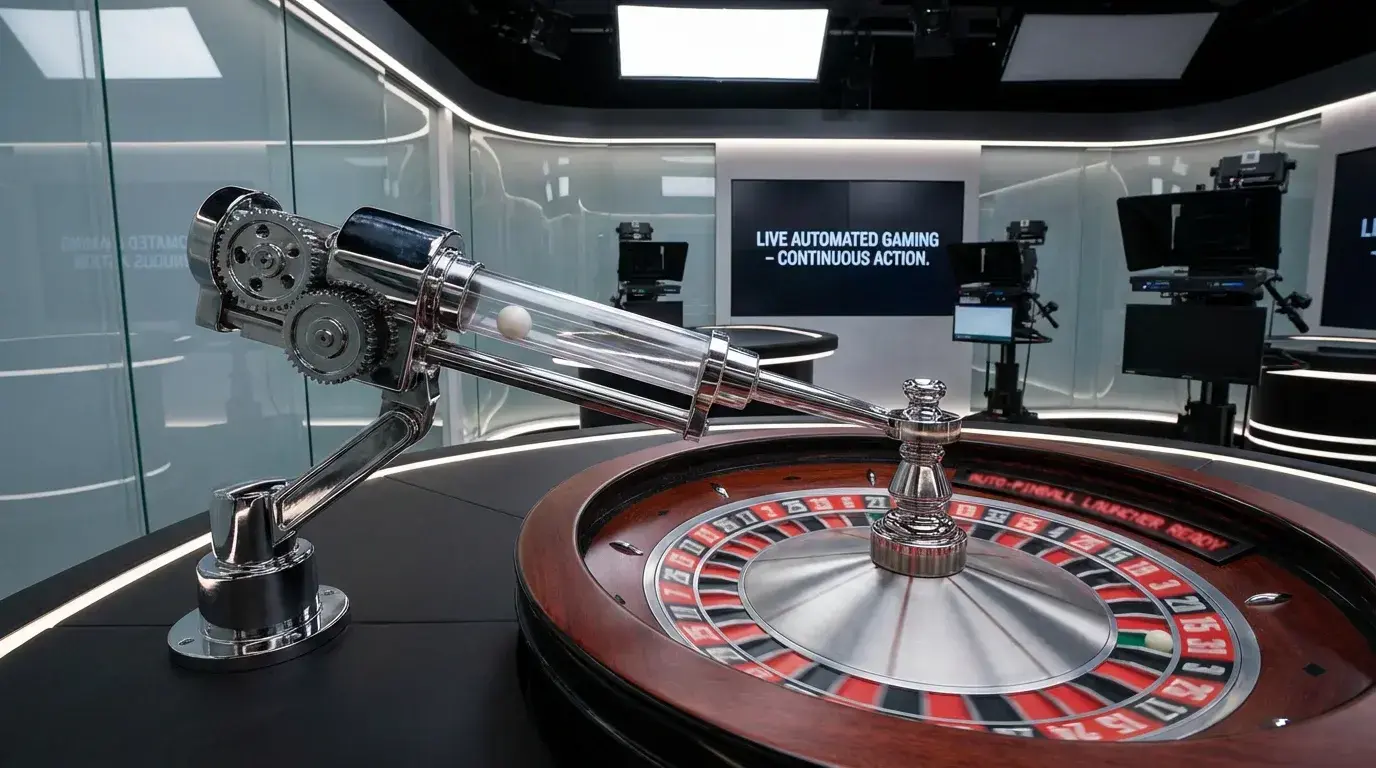
Auto roulette removes the human element from live casino play. No dealer stands at the table, no croupier calls bets or announces results. Instead, a real physical wheel spins continuously in a broadcast studio, driven by compressed air or mechanical automation, with cameras capturing every revolution. The result is roulette that runs faster, never takes breaks, and operates around the clock without pause.
For some players, this sounds like progress. Dealer-led tables average perhaps 60 to 80 spins per hour, limited by the time required for human interaction — collecting chips, paying winners, exchanging pleasantries with players. Auto roulette tables can exceed 80 spins per hour, sometimes approaching 100 on faster variants. More spins mean more action for those who crave it.
Others find auto roulette sterile, missing the social dimension that makes live casino appealing. Both perspectives are valid. Auto roulette serves a specific purpose: maximum roulette throughput for players who prioritise efficiency over atmosphere. At non-GamStop casinos, these tables offer an alternative that suits certain playing styles perfectly while leaving others cold.
How Automated Roulette Works
Auto roulette uses a genuine physical wheel — this is not RNG gaming with animated graphics. The wheel sits in a professional studio, illuminated by broadcast-quality lighting and filmed from multiple camera angles. Compressed air systems or mechanical launchers fire the ball into the spinning wheel at regular intervals, creating the same physics-based outcomes as any dealer-spun game.
Betting occurs through digital interfaces displayed alongside the video feed. Chip placement follows standard roulette conventions: inside bets, outside bets, and any special wagers the particular table offers. A countdown timer indicates when betting closes for each spin. Once the timer expires, no further bets are accepted, the ball is launched, and results are captured by optical recognition systems that instantly determine the winning number.
The automation extends to payouts and bet handling. Winning bets credit automatically to player balances. Losing bets clear from the virtual table. The next spin begins almost immediately after results are confirmed, with a fresh betting window opening as the wheel continues its perpetual rotation. Some tables run the wheel constantly, timing ball launches to coincide with optimal wheel speed.
Fairness verification works identically to dealer-led tables. The physical outcomes are subject to the same random distribution as any roulette wheel. Independent testing agencies audit the mechanical systems and optical recognition to ensure accuracy. The automation itself is the only novelty — the mathematics and probability remain unchanged from traditional roulette.
Speed and Availability Advantages
The most obvious benefit of auto roulette is pace. Dealer-led tables include natural pauses: the dealer interacts with players, handles physical chips, and occasionally engages in conversation. These moments contribute to the social atmosphere many players enjoy, but they also slow the game. Auto roulette eliminates these interruptions entirely.
A typical auto roulette table completes a spin every 45 to 60 seconds, including betting time. Evolution Gaming’s Speed Auto Roulette pushes this further with spins completing in under 30 seconds. For players who measure sessions by action density rather than clock time, auto roulette delivers substantially more decisions per hour.
Availability presents another advantage. Dealer-led tables require staffing, which means shift changes, breaks, and limited hours for less popular variants. Auto roulette runs continuously without interruption. The wheel spins at 3 AM the same as 3 PM. Players in unusual time zones or with irregular schedules find auto roulette reliably available when dealer-led options may be scarce.
Table minimums often trend lower on auto roulette compared to dealer-led games. Without dealer salary costs factored into operations, casinos can afford to offer reduced minimum bets. Players seeking low-stakes live roulette frequently find auto tables more accommodating than equivalent dealer-led options, which may require higher minimums to justify staffing.
Auto Roulette at Non-GamStop Casinos
Evolution Gaming dominates the auto roulette segment at non-GamStop casinos. Their Auto Roulette tables stream from dedicated studios with multiple wheel variants available: standard European wheels, VIP tables with elevated limits, and Speed Auto Roulette for maximum pace. Evolution’s production quality sets the industry standard — clean camera angles, reliable streams, and accurate optical recognition.
Pragmatic Play offers competing auto roulette products through their live casino division. The gameplay is comparable, with differences primarily in studio aesthetics and interface design. Some non-GamStop casinos offer both Evolution and Pragmatic auto roulette tables, allowing players to choose based on preference for presentation style or specific table limits.
Smaller providers including Ezugi and Vivo Gaming also supply auto roulette tables to non-GamStop platforms. Quality varies more significantly among these secondary providers, with some offering perfectly serviceable games and others delivering noticeably inferior stream quality or interface responsiveness. Test tables with minimal bets before committing to extended sessions.
When selecting auto roulette tables at non-GamStop casinos, verify the wheel type. Most auto roulette uses European single-zero wheels, but American double-zero options exist. The table name or information panel should specify, but confirm before betting. The automated nature of the game does not change the mathematics — double-zero still carries a 5.26% edge regardless of who or what spins the wheel.
Choosing Between Auto and Dealer-Led Tables
The decision between auto roulette and dealer-led tables comes down to what you want from your session. Neither option offers better odds — the house edge is identical on equivalent wheel types. The difference is entirely experiential.
Choose auto roulette if speed matters more than atmosphere. Players who find dealer interaction unnecessary, who want maximum spins per session, or who play during off-peak hours when dealer tables run limited options will appreciate the efficiency. Auto roulette also suits those who prefer focused, solitary play without the distraction of chat features or dealer banter.
Choose dealer-led tables if the human element enhances your experience. The social dimension of live roulette — watching a professional croupier work, interacting through chat, sensing the rhythm of a human-paced game — disappears entirely in auto roulette. Players who view roulette as entertainment beyond pure gambling often find auto tables feel hollow by comparison.
Budget considerations may also factor into the choice. Auto roulette’s lower minimums make it accessible for smaller bankrolls seeking live action. Conversely, the faster pace means more bets per hour, which can accelerate losses during cold streaks. A 10-pound-per-spin session lasting two hours at a dealer-led table might involve 140 spins. The same two hours at auto roulette could reach 200 spins or more. Bankroll planning should account for this difference.
The Machine Keeps Spinning
Auto roulette represents live casino gaming stripped to its mechanical essentials. A wheel spins, a ball bounces, gravity decides. Everything else — the dealer, the conversation, the deliberate pace — is removed to maximise throughput. What remains is pure roulette, as fast as technology allows.
This purity appeals to a certain type of player. Those who view roulette as a mathematical exercise rather than a social experience find auto tables efficient and unburdened. The wheel does not care whether you want conversation. It simply spins, over and over, waiting for your bet.
Non-GamStop casinos offer auto roulette alongside their dealer-led tables, giving players the choice rather than forcing a preference. The option exists for those who want it. The traditional experience remains for those who do not. Both share the same odds, the same wheel, the same physics. Only the human element differs — and only you can decide whether its absence is a feature or a flaw.