Best Non GamStop Casino UK 2026
Loading...
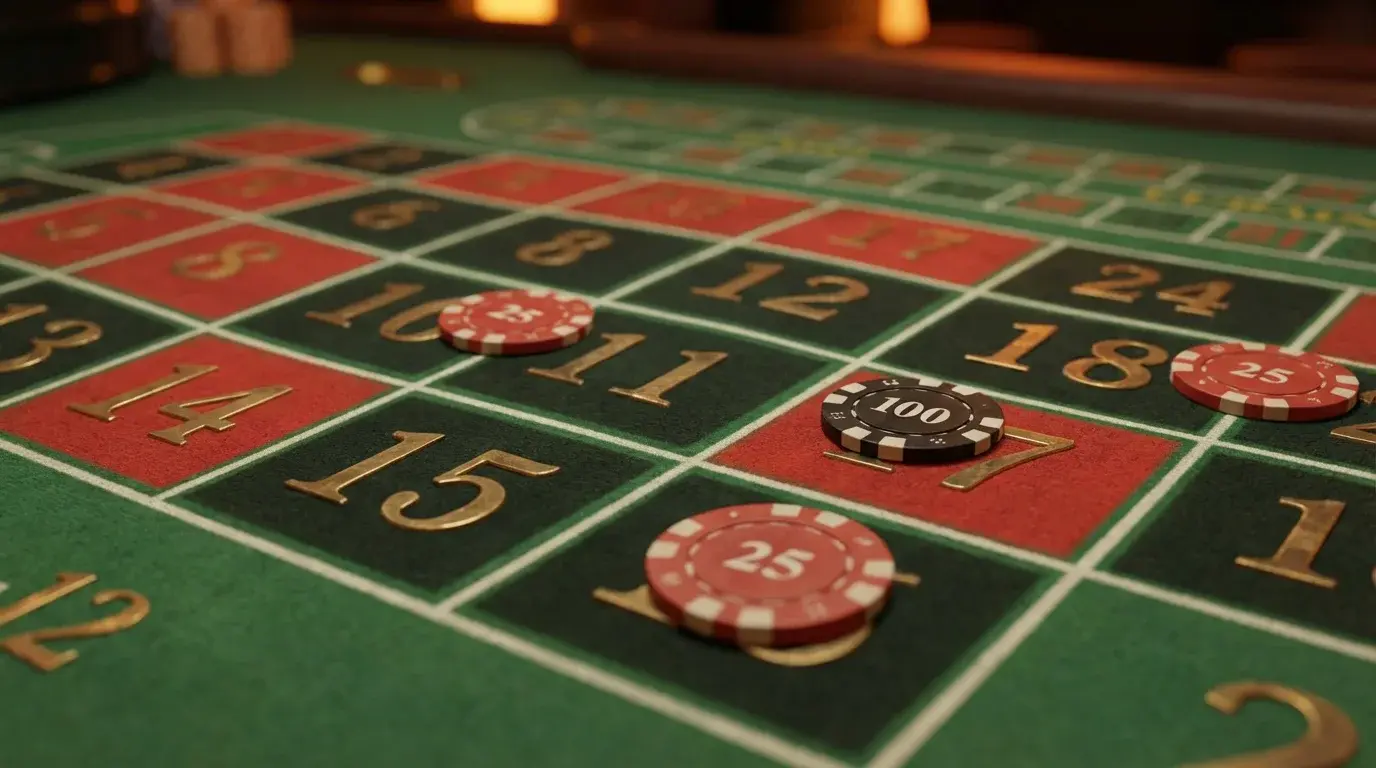
Inside bets occupy the numbered grid at the centre of the roulette layout. These wagers cover specific numbers or small groups of adjacent numbers, offering higher payouts in exchange for lower winning probability. Where outside bets provide frequent modest returns, inside bets deliver rare substantial wins. Understanding each type helps players construct betting approaches suited to their preferences.
The mathematics of inside bets follow consistent logic. Fewer numbers covered means lower probability of winning but higher payout when you do. A straight-up bet on a single number wins once in 37 spins on average (European wheel) and pays 35:1. A six-line bet covering six numbers wins roughly once in six spins and pays 5:1. The house edge remains constant at 2.7% across all inside bet types.
At non-GamStop casinos, inside bets function identically to any licensed venue. The table layouts, chip placements, and payout structures follow universal standards. This guide breaks down each inside bet type, explaining mechanics, odds, and practical considerations for players who want to venture beyond the simplicity of outside betting.
Straight-Up Bets
The straight-up bet is roulette’s purest wager: place your chip entirely within a single number’s square, and you win if the ball lands on that exact number. The payout is 35:1 — bet 10 pounds, win 350 pounds plus your stake returned. No other standard roulette bet offers higher returns per unit wagered.
Probability works against you correspondingly. On a European wheel with 37 pockets, your chance of hitting any specific number is 1 in 37, or approximately 2.7%. On American wheels with 38 pockets, this drops to 2.63%. You will lose most straight-up bets. The wins that do arrive must compensate for extended losing periods.
Variance runs extremely high on straight-up betting. Sessions can pass without a single hit on your selected numbers. Alternatively, the same number might appear multiple times in quick succession. Short-term results scatter widely around the mathematical expectation. Bankroll requirements increase substantially compared to lower-variance outside betting approaches.
Players often cover multiple numbers with straight-up bets to increase hit frequency while maintaining high payout potential. Betting 10 pounds each on five different numbers costs 50 pounds per spin but provides five chances to collect 350 pounds. The house edge remains 2.7% regardless of how many numbers you cover — the distribution of potential outcomes changes, not the expected value.
Split Bets
Split bets cover two adjacent numbers by placing your chip on the line between them. If either number hits, you win at 17:1 odds. The wager doubles your winning probability compared to straight-up bets while halving the payout — a proportional trade-off that maintains the same house edge.
Adjacency requirements limit split bet options. Numbers must share a border on the betting grid, not merely appear close numerically. You can split 1-2, 1-4, 2-3, 2-5, and so on according to the layout geometry. The zero pocket splits with 1, 2, or 3 depending on layout design. Learning which splits are possible comes quickly with minimal table observation.
Split bets suit players seeking middle ground between straight-up volatility and the lower payouts of broader inside bets. Covering two numbers provides more frequent hits than single-number betting while preserving meaningful win amounts. A 10-pound split returning 170 pounds plus stake still represents a substantial single-spin outcome.
Strategic coverage using splits can approximate sector betting without announced bet knowledge. Placing splits on adjacent pairs around a wheel section creates coverage patterns that some players prefer to scattered individual numbers. The house edge does not change, but the playing style may feel more purposeful.
Street, Corner, and Line Bets
Street bets cover three numbers in a horizontal row: 1-2-3, 4-5-6, 7-8-9, and so on through 34-35-36. Place your chip on the outer edge of the row to indicate the street bet. The payout is 11:1, and you win if any of the three covered numbers hits. Winning probability sits at approximately 8.1% on European wheels.
Corner bets span four numbers that share a common intersection point. Place your chip at the centre where four number squares meet. A corner on 1-2-4-5, for example, covers those four numbers at 8:1 payout. Winning probability reaches approximately 10.8%, making corners the most frequently hitting inside bet type before line bets.
Line bets, also called six-line or double street bets, cover six numbers across two adjacent rows. Place your chip on the outer intersection where two rows meet. Covering 1-2-3-4-5-6 or 31-32-33-34-35-36 pays 5:1 with winning probability around 16.2%. Line bets bridge the gap between inside and outside betting in terms of frequency and payout scale.
Additional inside bet variations exist at some tables. The basket bet on American roulette covers 0-00-1-2-3 with 6:1 payout and the worst house edge on the table. The trio bet covers three numbers including zero. These speciality bets appear less frequently but follow the same principle: more coverage means lower payout with constant house edge.
Inside Bet Strategy Considerations
Bankroll management differs substantially for inside bet players. The lower hit frequency means longer losing stretches between wins. A straight-up bettor might reasonably expect to hit their number once every 37 spins on average — but variance can push actual results far from this expectation. Sessions of 100 spins without hitting a selected number fall within normal probability range.
Bet sizing should account for this variance. Players wagering their entire session bankroll on a few straight-up spins risk early elimination before probability has opportunity to deliver expected wins. Spreading bankroll across more spins — even at reduced per-spin amounts — improves the chance of experiencing mathematical normalisation within your session.
Inside bets contribute fully toward bonus wagering requirements at most casinos, unlike outside bets which often count at reduced rates. Players clearing bonuses through roulette may find inside betting more efficient for requirement completion, though the higher variance creates risk of losing bonus funds before clearing completes.
Combining inside bets with outside coverage creates balanced betting profiles. A player might place core wagers on outside positions for steady action while adding small inside bets for occasional larger wins. This hybrid approach provides frequency from outside bets with excitement from inside possibilities.
High Risk, High Reward Territory
Inside bets define roulette’s dramatic potential. The 35:1 straight-up return, the satisfying 17:1 split hit, the solid 11:1 street collection — these moments create the memorable wins that outside betting rarely provides. Players who find even-money bets insufficiently exciting gravitate naturally toward inside positions.
The trade-off is increased volatility requiring different psychological preparation. Inside bet sessions feature more losing spins than winning ones, often dramatically so. Accepting this pattern as normal rather than frustrating proves essential for enjoying inside-focused play. The mathematics eventually deliver wins proportional to the risks taken — but individual sessions can deviate painfully from expectation.
Non-GamStop casinos offer the same inside bet options as any legitimate roulette table. The numbers, the payouts, the probabilities — all follow universal standards. Whether you prefer straight-up excitement, split compromises, or broader coverage through corners and lines, inside betting provides structured ways to seek larger individual wins at the cost of reduced hit frequency.